
The Best Legal AI Platforms in 2026: An Honest Breakdown
By Lucio Team

See why practitioners rank Lucio AI among the best legal AI platforms in 2026.
The legal industry has crossed a threshold. AI is no longer a novelty that tech-forward firms experiment with. It is now a core part of how attorneys research, draft, review, and advise. But with that growth has come noise. Dozens of platforms now claim to be the best legal AI platform on the market, and sorting through those claims takes time that most practitioners simply do not have.
This guide cuts through the marketing. We evaluated the leading platforms across real-world criteria, compared their core features side by side, and identified where most tools still leave attorneys exposed. Whether you are a solo practitioner, a partner at a mid-size firm, or in-house counsel at a corporation, this breakdown will help you make a confident and defensible decision.
How We Evaluated the Best Legal AI Platforms in 2026
Choosing the best legal AI platform is not about picking the one with the most features or the flashiest interface. It is about identifying which tools actually hold up when the work gets hard.
Our evaluation framework looked at six core dimensions:
Accuracy and citation reliability
Legal AI is only as useful as it is correct. We examined how each platform sourced its outputs, whether it hallucinated citations, and how confidently it flagged uncertainty. Platforms that produced confident-sounding but unverifiable legal analysis ranked lower, regardless of their other strengths.
Scope of legal coverage
Some platforms specialize in contract review. Others focus on litigation research, compliance, or regulatory tracking. We looked at whether each tool offered meaningful depth across practice areas or spread itself too thin.
Data security and confidentiality architecture
Client confidentiality is not negotiable. We evaluated how each platform handles uploaded documents, whether data is used for model training, and what enterprise-grade protections are in place. [Internal link: Lucio AI's data security overview]
Integration and workflow fit
A powerful AI tool that cannot connect to your existing systems creates more friction than it eliminates. We looked at integrations with document management systems, practice management platforms, and common legal research databases.
Usability for legal professionals
Platforms built by engineers for engineers often require significant onboarding. We assessed how quickly attorneys without technical backgrounds could become proficient.
Pricing transparency and value. We compared pricing structures honestly, including what is locked behind enterprise tiers and where hidden costs tend to emerge.
The Best Legal AI Platforms Compared: Feature-by-Feature Breakdown
Here is a direct comparison of the platforms most commonly referenced as the best legal AI platform options in 2026.
Thomson Reuters CoCounsel
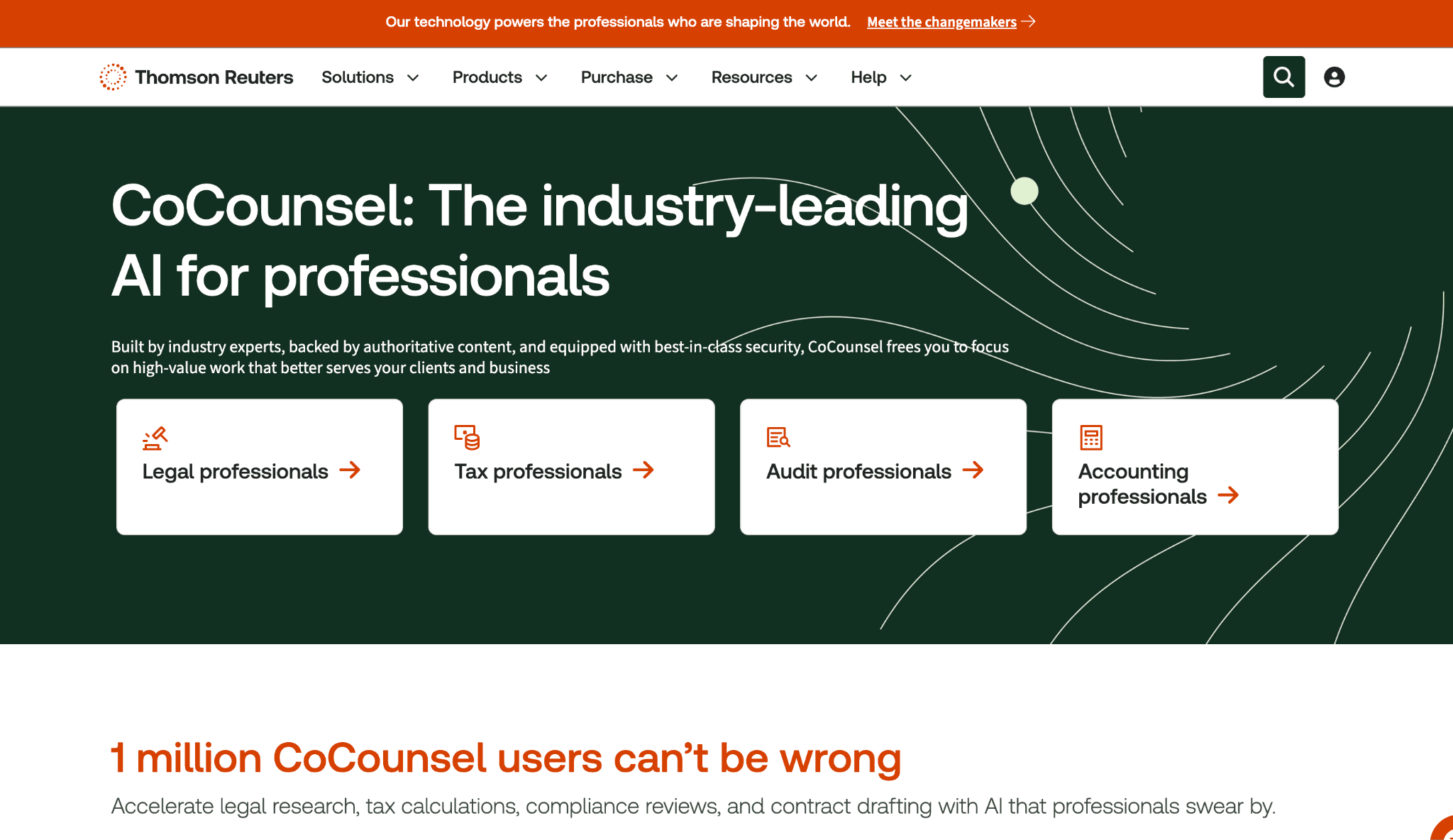
Thomson Reuters rebuilt its AI offering around a deeply integrated research-to-drafting workflow. CoCounsel is particularly strong for litigators who already live inside Westlaw. Its citation accuracy is among the highest in the industry because it draws from verified legal databases rather than open web content. The primary limitation is cost. Smaller firms often find the pricing structure difficult to justify unless they are already paying for full Westlaw access.
LexisNexis Lexis+ AI
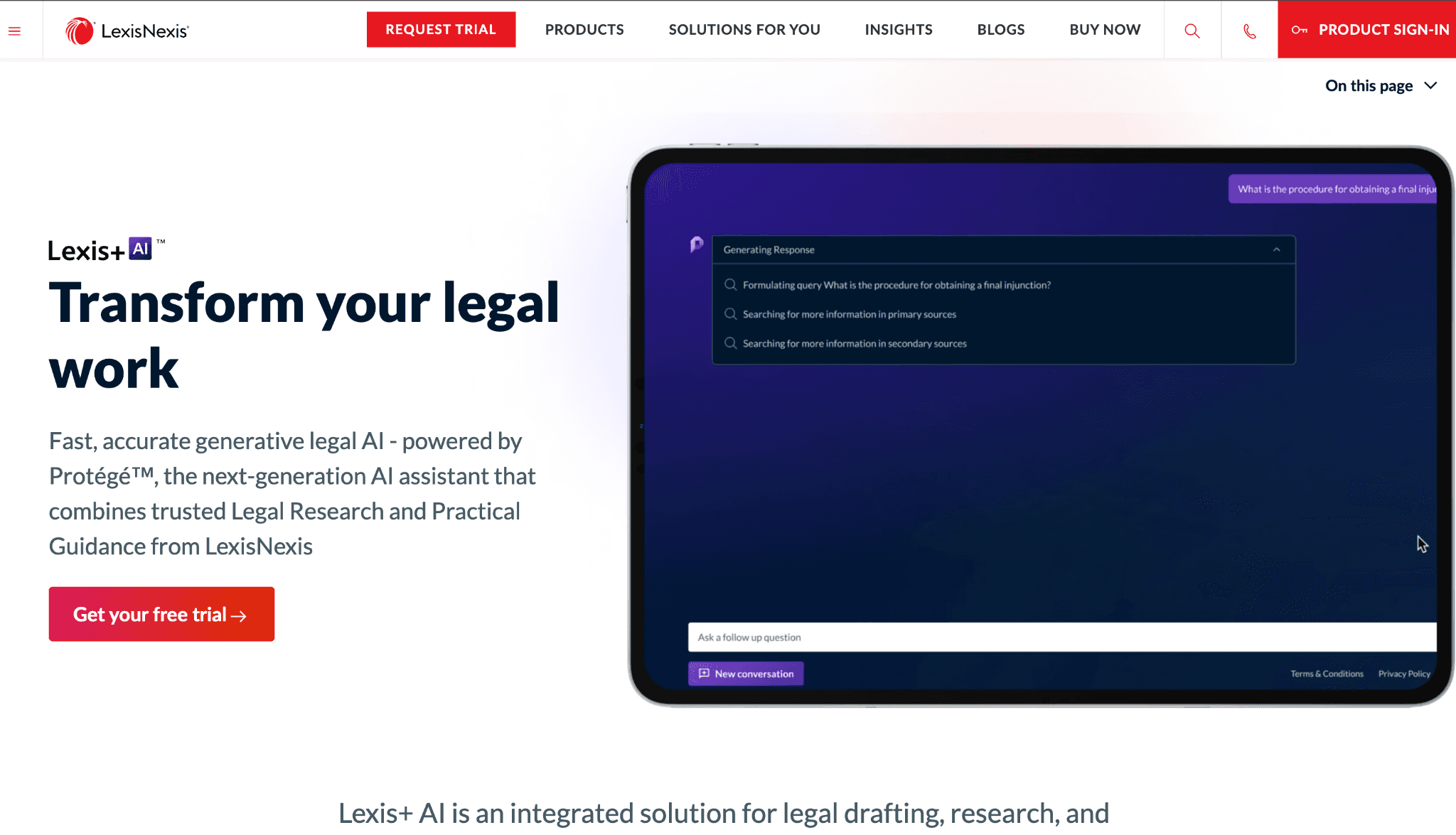
Lexis+ AI brings similar depth for Lexis subscribers and has improved substantially in its contract analysis and drafting assistance features. Its strength is in regulatory research and multi-jurisdictional analysis. Like CoCounsel, it performs best for firms already embedded in the Lexis ecosystem. Standalone adoption can feel clunky.
Harvey AI

Harvey positioned itself as the enterprise-grade legal AI platform for large law firms and has since expanded into mid-market territory. It performs well on complex transactional work and offers strong customization for firms that want to train the platform on their own precedent libraries. The tradeoff is that Harvey requires meaningful implementation investment and works best at scale. Solo and small firm attorneys will likely find it over-engineered for their needs.
Spellbook

Spellbook integrates directly into Microsoft Word, which gives it a practical advantage for transactional attorneys who live in that environment. It focuses on contract review and redlining with reasonable accuracy. It does not attempt to be a comprehensive legal research platform, which is both its limitation and its focus.
Lucio AI

Lucio AI takes a different approach. Rather than anchoring itself to one document type or one phase of legal work, Lucio AI is built for the full practitioner workflow from initial research through drafting, review, and client communication. It is purpose-built for legal professionals and combines strong citation accuracy with a conversational interface that reduces the learning curve. We will cover Lucio AI in greater depth in section six.
Where Most Legal AI Platforms Still Fall Short
Even the best legal AI platform options in 2026 have meaningful limitations that attorneys should understand before relying on these tools in practice.
Hallucination remains a real risk. Most platforms have reduced the frequency of fabricated citations, but they have not eliminated them. Any attorney who accepts AI-generated research without independent verification is accepting malpractice exposure. The platforms that handle this best are explicit about uncertainty rather than masking it with confident-sounding language.
Jurisdiction-specific accuracy varies significantly. Most platforms perform well on federal law and the law of major states like New York and California. Performance drops when you move into smaller jurisdictions, administrative agency practice, tribal law, or emerging regulatory areas. Attorneys practicing in these areas need to calibrate their reliance accordingly.
Contract review lacks contextual judgment. AI tools can identify missing standard clauses and flag unusual language, but they struggle with judgment calls that depend on deal context, client risk tolerance, and negotiation history. The output is a starting point, not a finished analysis.
Confidentiality controls are inconsistent. Not every platform applies the same rigor to data handling. Some consumer-facing tools and general-purpose AI models process uploaded documents in ways that could implicate client confidentiality rules. Attorneys need to read the terms of service carefully before uploading anything with client-identifying information.
Workflow integration is still fragmented. Even platforms with strong integrations rarely connect seamlessly to every system a firm uses. Document management, time tracking, billing, and case management often remain separate workflows.
Best Legal AI Platform by Practice Area and Firm Type
The best legal AI platform for a transactional attorney at a large firm is not the same tool that serves a family law practitioner at a solo practice. Here is a practical breakdown.
Litigation and Legal Research
Litigators benefit most from platforms with deep, verified research databases and strong brief drafting assistance. CoCounsel and Lexis+ AI are the natural choices for firms already paying for those underlying databases. Lucio AI competes strongly here for practitioners who want research-to-draft capability without being locked into a specific database subscription.
Transactional and Contract Work
Spellbook is purpose-built for contract work within Word. Harvey performs well for complex M&A and finance transactions at scale. Lucio AI provides strong contract drafting and review capabilities for attorneys who need flexibility across deal types without committing to a specialist-only tool.
Solo and Small Firm Practitioners
This segment is underserved by most enterprise platforms. Pricing, implementation complexity, and feature bloat all create barriers. Lucio AI was designed with this user in mind. It is accessible, practically priced, and does not require a dedicated IT team to implement. [Internal link: Lucio AI for small firms]
In-House Counsel
In-house teams often need a combination of contract lifecycle management, regulatory tracking, and quick research turnaround. Harvey and Lucio AI both perform well here, though Harvey requires more setup investment. In-house teams with limited legal headcount benefit from tools that reduce turnaround time on routine work without sacrificing accuracy.
Compliance and Regulatory Practice
Regulatory practice demands tools that track changes across agency guidance, rulemaking, and legislative activity. Lexis+ AI has strong coverage in this space. Lucio AI's regulatory tracking features have improved significantly in 2026 and are competitive for most practitioners.
How to Evaluate a Legal AI Platform Before You Commit
Before signing a contract with any legal AI vendor, run through this practical evaluation process.
Test it on real work, not demos. Ask for a trial period and run the platform through the specific tasks your practice handles daily. Demo scenarios are designed to show the platform at its best. Your actual use case will reveal gaps that demos conceal.
Ask specific questions about data handling. Before uploading any client documents, confirm whether your data is used to train the model, how long documents are retained, who has access, and what the vendor's breach notification process looks like. If the vendor cannot answer these questions clearly, treat that as a disqualifying signal.
Evaluate citation behavior deliberately. Run a set of research queries where you already know the correct answer. Check whether the citations the platform returns are real, whether they say what the platform claims they say, and whether the platform acknowledges when it is uncertain.
Assess the learning curve honestly. A tool that requires significant training time imposes a real cost. Ask about average onboarding timelines, available support resources, and whether the vendor offers practice-area-specific training materials.
Calculate total cost of ownership. List price is only part of the cost. Add implementation time, integration costs, training time, and any required adjacent subscriptions. Compare that full number across competing platforms.
Check the vendor's update cadence. Legal AI is evolving quickly. A platform that is not actively improving will fall behind. Ask how often the model is updated, how jurisdictional coverage expands, and whether the vendor has a public product roadmap.
Why Lucio AI Ranks Among the Best Legal AI Platforms for Practitioners in 2026
Lucio AI was not built to be the biggest legal AI platform. It was built to be the most useful one for working attorneys who need accurate, reliable, and practical support across their daily workflow.
Several factors distinguish it in a crowded market.
Full-workflow coverage without complexity. Most platforms specialize in one phase of legal work. Lucio AI covers research, drafting, contract review, and client communication drafting in a single interface. That integration matters because legal work rarely happens in isolated phases. A research finding shapes a draft. A client question requires both a research check and a communication response. Lucio AI handles that continuity better than tools that require you to switch platforms mid-task.
Citation accuracy with appropriate uncertainty signaling. Lucio AI does not hide uncertainty behind confident language. When it identifies a legal principle with strong source support, it says so. When it encounters a gray area or a jurisdiction where coverage is limited, it flags that explicitly. That transparency is not a weakness. It is what makes the tool safe to use in practice.
Purpose-built data security. Client documents uploaded to Lucio AI are not used for model training. The platform operates under attorney-grade confidentiality standards and provides clear documentation that satisfies the due diligence requirements most state bar guidance now recommends before using AI tools with client data. Take a look at Lucio AI’s security and compliance adherence.
Designed for practitioners, not just enterprises. Lucio AI serves solo attorneys, small firms, mid-size practices, and in-house teams. The pricing is structured to be accessible without requiring a firm to hit a minimum seat count before it makes financial sense. Onboarding is measured in hours, not weeks.
Continuous improvement across jurisdictions. The platform updates regularly with expanded coverage across state and federal jurisdictions, administrative agency content, and regulatory guidance. Practitioners in specialized or lower-volume jurisdictions have seen meaningful improvement over the past year.
Lucio AI is not perfect, and no honest review would claim otherwise. No platform is. But for practitioners who want a single, reliable tool that handles the breadth of their daily work without requiring enterprise-level investment, it stands out as one of the most practical choices available in 2026. Start now with Lucio
FAQs
What is the most accurate legal AI platform for contract review in 2026?
Accuracy in contract review depends on what you are reviewing and at what level of complexity. For standard commercial contracts, Spellbook and Lucio AI both perform well. For highly complex transactional work, Harvey is strong but resource-intensive to implement. The key variable is whether the platform understands deal context or simply flags textual anomalies. The best tools do both and are transparent about the difference.
You can use AI-generated research, but you cannot rely on it without independent verification. Every state bar that has issued guidance on AI use has been consistent on this point. AI research is a starting point, not a finished work product. Attorneys who cite AI-generated cases without verifying that those cases exist and say what the AI claims they say are accepting significant risk. The best legal AI platform options are explicit about this limitation rather than encouraging uncritical reliance.
This varies significantly. Enterprise platforms like Harvey and CoCounsel typically offer robust data isolation and contractual confidentiality protections. General-purpose tools like standard ChatGPT carry much higher risk because documents may be used for model training. Lucio AI operates under a confidentiality architecture specifically designed for attorney use, with no model training on uploaded client content. Before using any platform with client information, request written documentation of the vendor's data handling practices and compare it against your jurisdiction's guidance on technology competence.
Yes, with the right tool. The platforms built for enterprise adoption are often not worth the cost or complexity for smaller practices. But tools like Lucio AI that are priced and designed for individual practitioners or small teams can meaningfully reduce the time spent on research, routine drafting, and document review. For a solo attorney billing hourly, recovering two to three hours per week through AI assistance pays for most subscriptions many times over.
What is the difference between general-purpose AI like ChatGPT and a purpose-built legal AI platform?
General-purpose AI tools are trained on broad internet content and are not calibrated for legal accuracy, citation reliability, or jurisdictional specificity. They do not have access to verified legal databases, and their outputs can be convincing without being correct. Purpose-built legal AI platforms are trained on verified legal content, are designed to surface and cite authoritative sources, and are built with the specific accuracy and confidentiality requirements of legal practice in mind. For anything involving client work, the distinction is not just practical. It may be an ethical obligation.
How long does it typically take to implement a legal AI platform across a firm?
It depends on the platform and the firm's size. Enterprise tools like Harvey can take weeks to months to fully implement, especially when custom training on firm precedents is involved. More accessible platforms like Lucio AI can be operational within a day or two for individuals and within a week for most small to mid-size teams. The key factors are how much customization is required, whether the platform needs to integrate with existing systems, and how much attorney training is needed before the tool becomes genuinely useful. Most vendors will provide realistic implementation timelines if you ask directly before purchasing.